
Interactive Notebooks are making a comeback in classrooms. For years, classrooms moved toward more technology, more digital assignments, and more screen-based learning. Now, many teachers are looking for ways to bring students back to paper, pencils, and hands-on learning. Interactive notebooks offer a way to make that shift without sacrificing the engagement and organization that teachers loved about digital tools. Going back to paper doesn’t have to mean going back to boring worksheets, endless note-taking, or students copying information from the board.
This is where interactive notebooks can make a difference.
What are Interactive Notebooks?
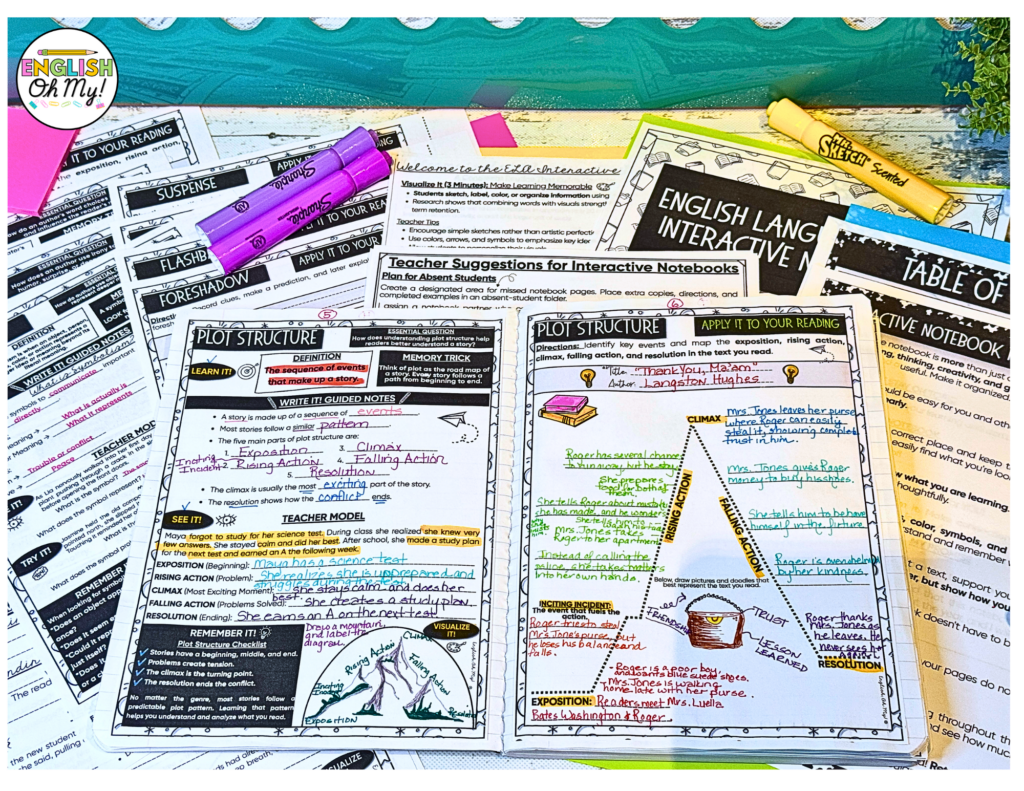
Interactive notebooks give students a dedicated space to record what they’re learning, interact with new concepts, practice important skills, and create a resource they can return to throughout the school year. Instead of completing an activity and immediately forgetting about it, students build a personalized collection of learning that grows right along with them.
They can write, sketch, annotate, organize ideas, and practice. Most importantly, they can actively engage with what they are learning without needing another screen in front of them.
For teachers who are looking to incorporate more paper-based learning into their classrooms, interactive notebooks can offer the best of both worlds: the organization and engagement we want for students, combined with the simplicity of a notebook and a pencil.
This is a nice addition to the classroom, and it does not mean you have to abandon all tech. It’s just a great way to balance the classroom.
Why Do Interactive Notebooks Work Well in the Classroom?
1.They reduce passive screen time. Students physically write, annotate, sketch, and interact with concepts.
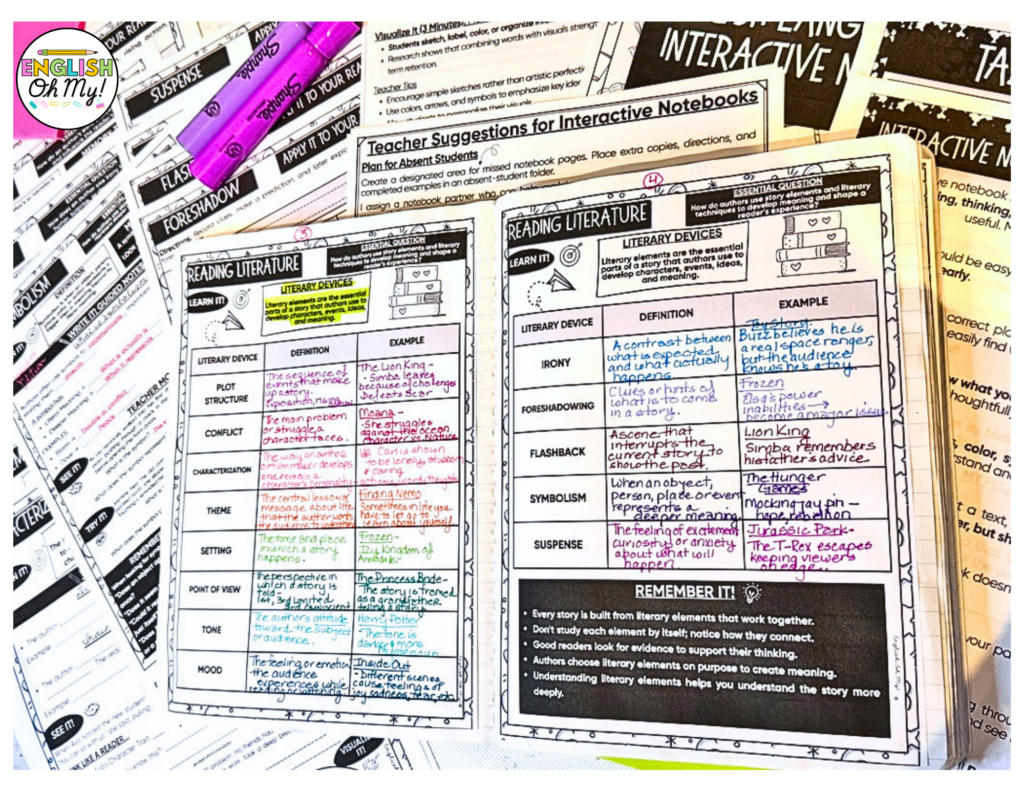
2. They create a year-long reference tool. Students can flip back to plot, conflict, characterization, theme, tone, mood, and literary devices whenever they need them.
3.They make note-taking more purposeful. Your Learn It → Write It → See It → Visualize It → Try It → Remember It system is perfect here.
4. They support active learning. Students aren’t simply copying definitions. They’re applying the skill, analyzing examples, and using text evidence.
5. They work with any text. This is a major selling point for your resource. Teachers can teach the concept once and then return to the notebook while reading short stories, novels, or independent reading books.
6. They provide a break from technology without feeling old-fashioned. The doodles, interactive elements, quick practice, and visual organization make paper engaging.
7. They help students build independence. Instead of asking, “What’s dramatic irony again?” students know exactly where to find it.
Benefits to Using These Notebooks in Your Classroom
1. Writing by hand encourages deeper processing.
One of the most well-known findings in educational research is that handwriting encourages students to process information rather than simply copy it.
Researchers Mueller and Oppenheimer found that students taking handwritten notes tended to process ideas more deeply because they summarized and rephrased information rather than transcribing it word for word. This led to stronger conceptual understanding in many learning situations.
How this relates to interactive notebooks:
Interactive notebooks require students to:
- summarize
- paraphrase
- organize ideas
- write explanations
rather than simply filling in blanks on a computer.
2. Interactive notebooks promote active learning.
Students aren’t passive recipients of information. They are constantly:
- drawing
- writing
- highlighting
- categorizing
- connecting ideas
- reflecting
Educational organizations note that interactive notebooks help students classify, synthesize, and reflect on learning instead of using traditional linear note-taking.
3. They encourage generative note-taking.
Good interactive notebooks don’t ask students to copy. They ask students to:
- explain
- connect
- predict
- infer
- apply
Generative note-taking, where students reorganize and interpret information, has consistently been associated with stronger learning than verbatim copying.
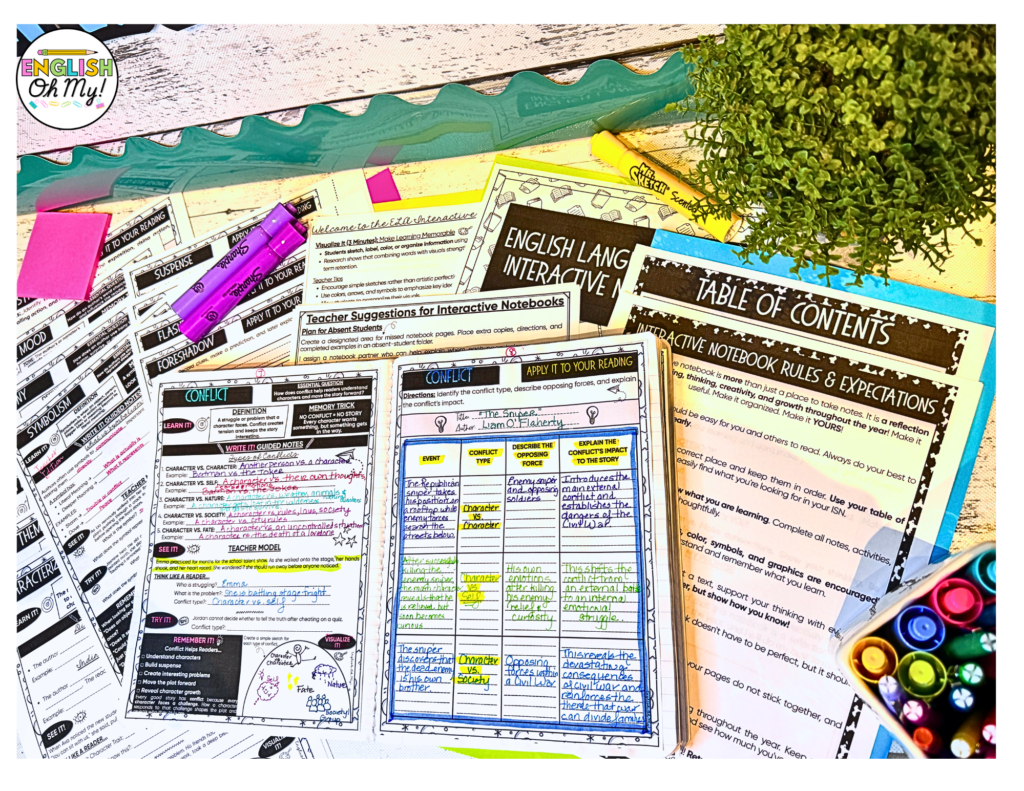
Why I’m Bringing Interactive Notebooks Back
After teaching middle school ELA for more than two decades, I’ve learned that students don’t need more worksheets. They don’t need more random activities, and certainly don’t need to spend half the class cutting and gluing tiny pieces of paper. They need a learning system.
That’s exactly why I decided to create a new collection of interactive notebooks. I wanted something that would bring students back to paper without bringing back the busywork that often gave interactive notebooks a bad reputation.
Instead of spending twenty minutes cutting out foldables, students spend that time thinking.
Instead of creating pages that are used once and forgotten, students build a notebook they return to all year long.
Every page is designed to teach a skill, provide guided practice, and then help students immediately apply what they’ve learned to authentic reading. The result is a notebook that becomes less of a craft project and more of a learning tool.
My Six-Step Learning Process
Every notebook page follows the same six-step process. Once students learn the routine, they know exactly what to expect each time they open their notebooks.
Learn It
Students begin with an essential question, academic vocabulary, and a simple explanation of the skill they’ll be learning. Before students can analyze literature, they need a clear understanding of the concept.
Write It
Students complete guided notes that focus on the most important information.The notes are concise, purposeful, and designed to eliminate unnecessary copying while still encouraging students to process new learning.
See It
Before students work independently, they examine a teacher-model example. Seeing the thinking process modeled builds confidence and gives students a clear picture of what success looks like.
Visualize It
Students create a simple sketch, symbol, or doodle that represents the concept. Research suggests that combining words with visuals can strengthen memory by giving students multiple ways to recall information.
Try It
Students immediately practice the new skill using a short passage or example. Learning doesn’t stop with definitions. Students begin applying the concept while it’s still fresh.
Apply It to Your Reading
This is the piece I believe is often missing from traditional interactive notebooks. Each lesson includes a companion page that students can use with any novel, short story, article, or independent reading book.Instead of practicing the skill one time and moving on, students continue applying it throughout the year.
Whether they’re identifying characterization in The Outsiders, analyzing conflict in Thank You, Ma’am, or collecting evidence for theme in their independent reading book, students return to the same notebook strategy again and again. That’s where real learning happens.
You Can These Worksheets Too…
I added all of these Literary Devices Worksheets to my store, as I had SO many requests, and you can have them too! Click any of the images below, and it will bring you to the product.
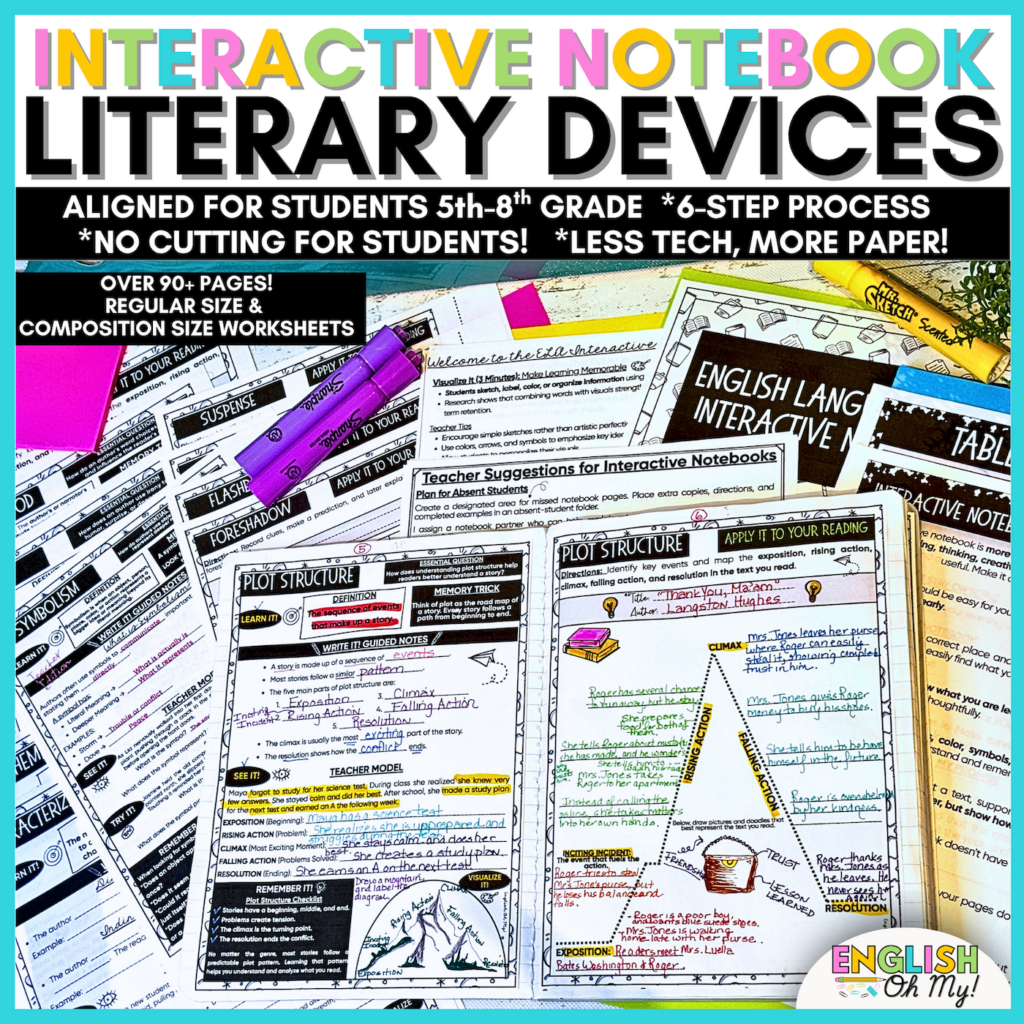
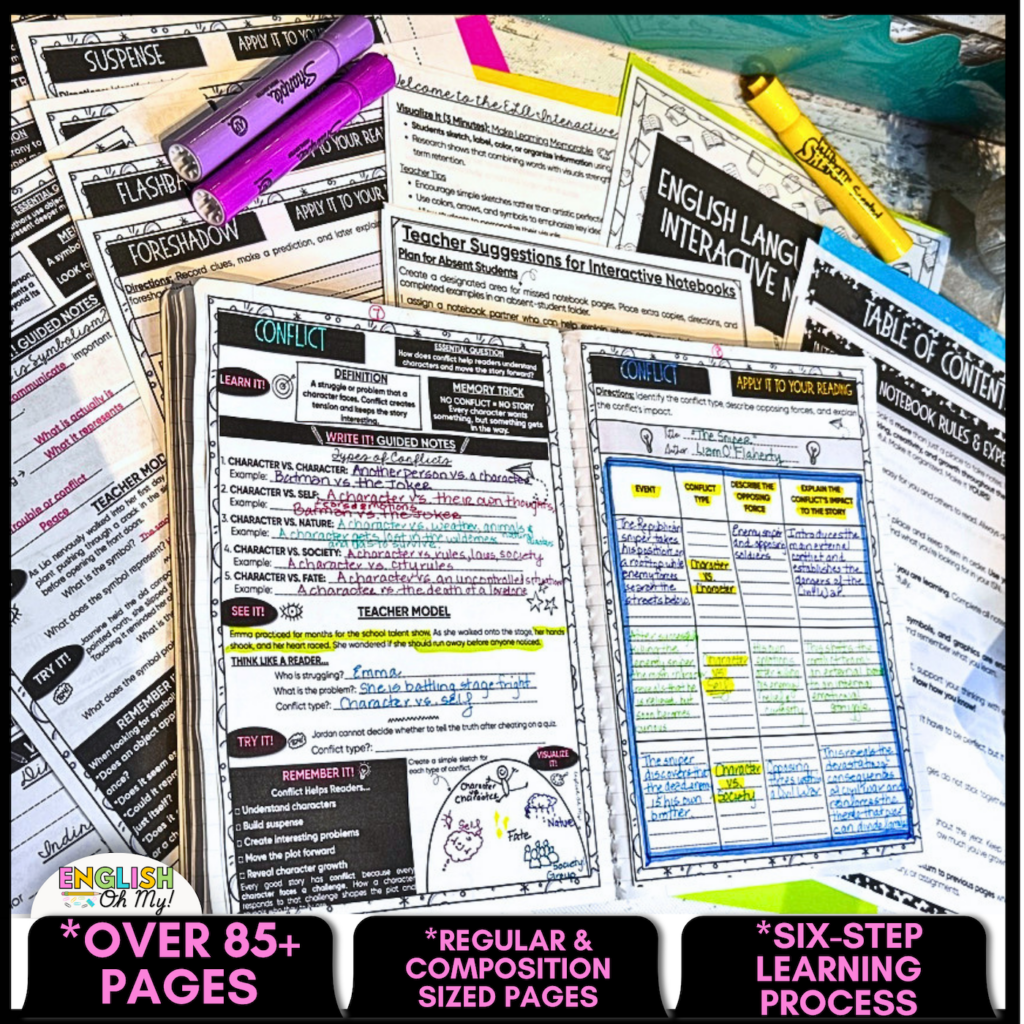
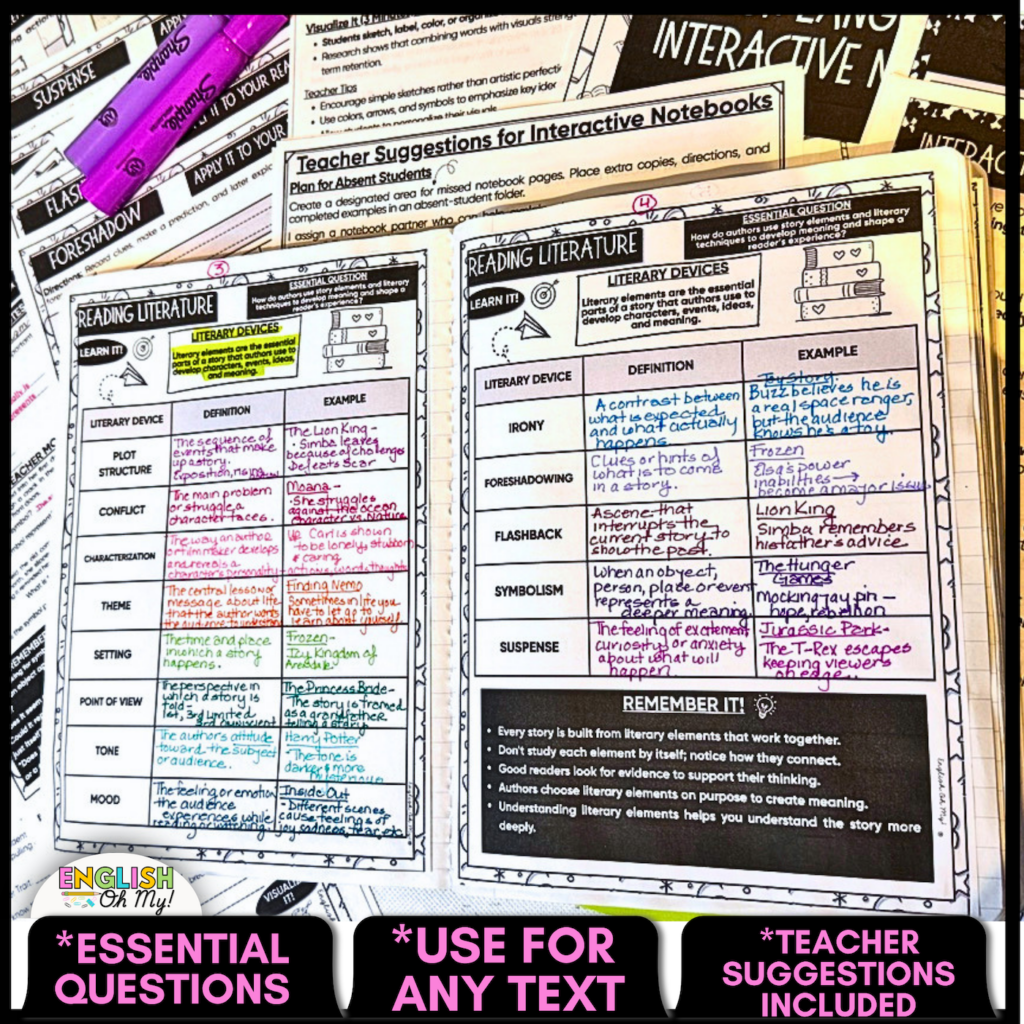
Technology will always have a place in our classrooms, and I still believe it can be a powerful too. Some learning experiences are simply better on paper. It we want students to think deeply, interact with text, and create lasting reference tools they actually use, interactive notebooks may be exactly what our classroom need right now.
If you have any questions about my Interactive Notebooks, just send me an email at kim@englishohmy.com.